
Effective nose cleaning for children?
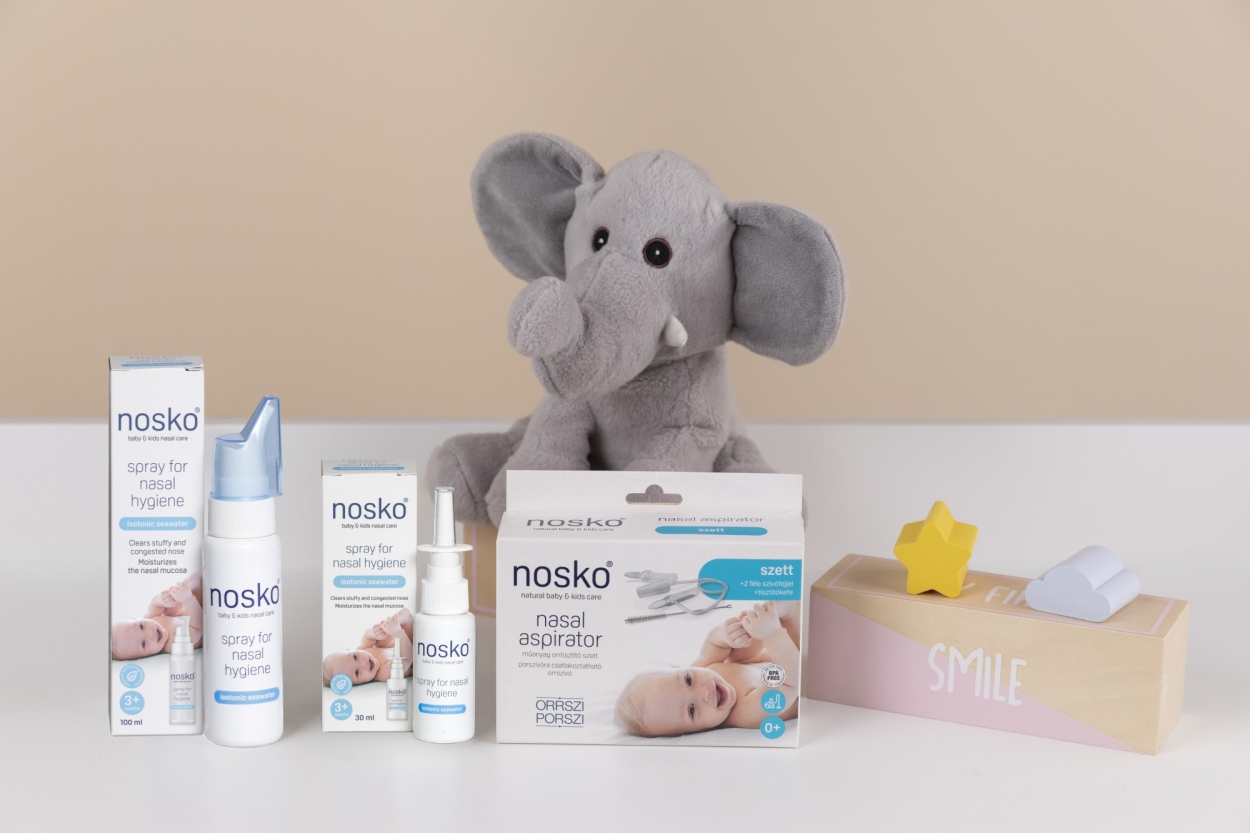
Use a physiological solution and a nasal aspirator together
Nasal congestion in young children is not only uncomfortable but can also pose a health risk, so it is important to address it in every case. When a child is too young to blow his nose, isotonic nasal sprays and vials, or nasal aspirators can be used to help clear the nose. A combination of these is most effective.
How can the use of a physiological saline solution help the problem of nasal congestion?
Studies have shown that isotonic and hypertonic solutions are well tolerated and can be used not only in young children but also in infants, of course following the recommendations for the product. They can be effective in treating nasal congestion without medication by improving mucosal clearance.1,2 They loosen nasal secretions to help clear them, which can also provide relief from runny noses and allergic nasal congestion. In addition, the use of isotonic nasal sprays or vials helps to keep the mucous membranes of the nose moist, which can also help to prevent infections.
How does a nasal aspirator help?
Both vacuum cleaner attachable and hand-held nasal aspirators work on the same principle: they create a vacuum by using suction to clean the nasal passages. Nosko's nasal aspirators are perfectly safe also for newborns, so they can be used to remove nasal secretions even for the smallest children.
Why should the two methods be used together?
Experience and research show that the best way to clean young children's noses is to use a physiological vial or nasal spray before using nasal aspirator. These loosen congested, condensed mucus, making nasal vacuuming more effective.
In a study involving 435 patients, the following convincing results were obtained: children treated with the combined method were about 20% less likely to develop otitis media compared to those who received only isotonic solution.3
So the best way to clean the nose effectively is to loosen the nasal mucus before suctioning using a physiological solution. Nosko offers a range of nasal sprays and vials for this purpose.
1 Satdhadbudha A, Poachanukoon O. Efficacy of buff- ered hypertonic saline nasal irrigation in children with symptomatic allergic rhinitis: a randomized double-blind study. Int J Pediatr Otorhinolaryngol 2012;76:583-8.
2 Wang YH, Yang CP, Ku MS, Sun HL, Lue KH. Efficacy of nasal irrigation in the treatment of acute sinusitis in children. Int J Pediatr Otorhinolaryngol 2009;73:1696- 701.
3 Montanari F, Ceschin F, Masotti S, Bravi F, Chinea B, Quartarone G. Minerva Pediatrica, 2010;62:9-21. Observational study on the performance of the Narhinel method (nasal aspirator and physiological saline solution) versus physiological
saline solution in the prevention of recurrences of viral rhinitis and associated complications of the upper respiratory tract infections (URTI), with a special focus on acute rhinosinusitis and acute otitis of the middle ear.